Service
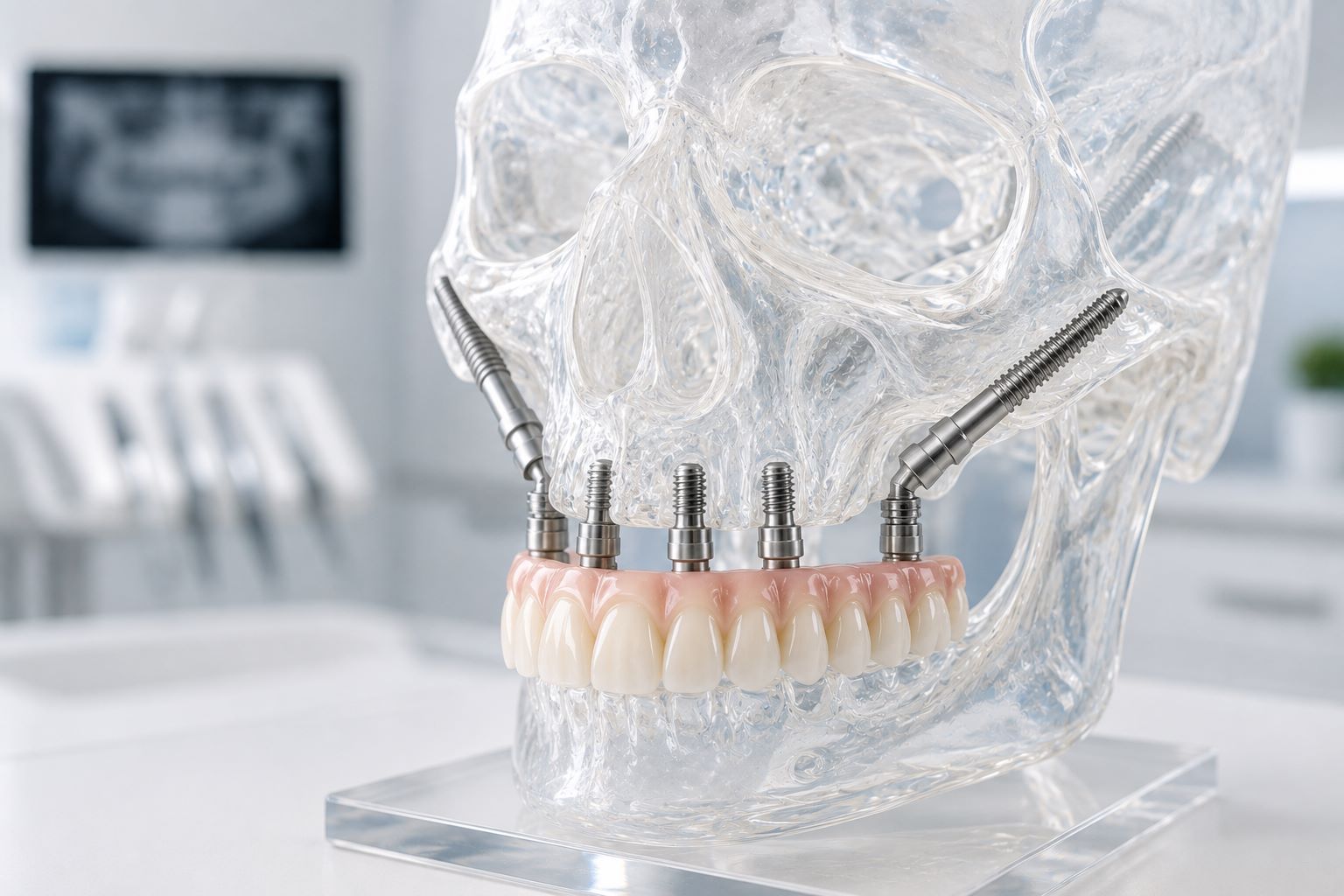
Zygomatic implantology
Implant rehabilitation for cases with insufficient maxillary bone.
Dedicated surgical solutions when traditional implants are not indicated or are not enough.
Sections
03
Information blocks
FAQ
02
Frequently asked questions
Links
02
Related services
What this page covers
The sections reuse the existing local content and keep the reading order clear without adding new claims.
- 01
Surgical evaluation
When bone volume is not sufficient
- 02
Planning
Case study and personalized planning
- 03
Functional goal
Stability and support for prosthetic rehabilitation
Key content
Main treatment blocks.
Each card uses the existing catalog data to keep the page clear, stable, and readable on desktop and mobile.
Surgical evaluation
When bone volume is not sufficient
Zygomatic implantology is a surgical option for selected patients with severe atrophy of the upper jaw, when clinical evaluation shows that traditional implants would not provide adequate support.
Planning
Case study and personalized planning
The procedure requires careful planning, with anatomical analysis, radiographic assessment, and a surgical pathway defined around the individual clinical case.
- Preliminary assessment of the bone condition.
- Definition of the surgical and prosthetic strategy.
- Treatment choice only after a specialist consultation.
Functional goal
Stability and support for prosthetic rehabilitation
The goal is to obtain stable support for prosthetic rehabilitation when anatomical conditions require an approach different from conventional implantology.
Frequently asked questions
Essential answers for orientation.
The static Q&A cards stay accessible without JavaScript and only use the service content already stored in the catalog.
Who is zygomatic implantology for?
It is intended for selected patients with major bone loss in the upper jaw, after a thorough clinical and radiographic evaluation.
Does it always replace traditional implantology?
No. It is a specific solution for complex cases and should be considered only when the clinical situation requires it.
Related services
Related pathways to consider together.
The links use the services already present in the local catalog and open their dedicated pages.
Oral surgery and implantology
Replacement of missing teeth with titanium artificial roots.
Personalized surgical plans, including implantology and immediate loading options.
Open service
Oral hygiene and prevention
Professional cleaning sessions and personalized prevention plans.
Plaque and tartar removal, typically recommended once or twice per year.
Open service